
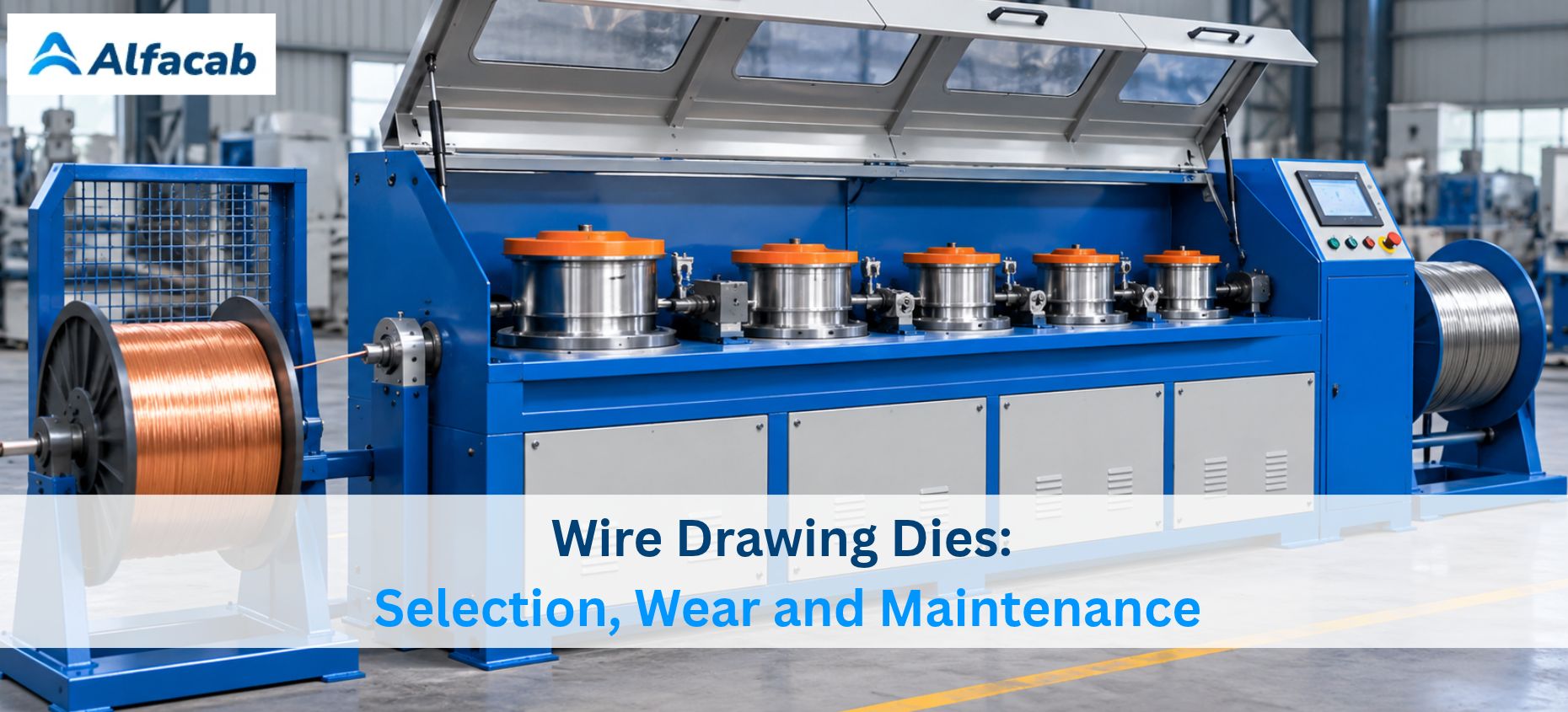
In wire drawing, the machine gets the credit, but the die does the real work. Every reduction in wire diameter happens inside a small die, and its condition decides the wire size, the surface finish, and how often the wire breaks. A worn or poorly chosen die can ruin an otherwise well-run line. This guide explains what wire drawing dies are, the materials used, how to select them, and how to maintain them for consistent results.
What Are Wire Drawing Dies?
A wire drawing die is a precisely shaped tool with a small hole through which wire is pulled to reduce its diameter. The wire passes through under tension, and the shape of the hole squeezes the metal down to the size of the die opening. Each die in a multi-stage machine is slightly smaller than the one before it.
The die is usually mounted in a casing or holder, and the whole assembly is fitted into the die box of the drawing machine, where lubricant is supplied to the wire and die.
Parts of a Wire Drawing Die
A die has several zones, each with a purpose.
- Entry (bell) zone: guides the wire in and helps draw lubricant into the die.
- Approach zone: where the actual reduction takes place as the wire is squeezed down.
- Bearing zone: the short straight section that sets the final diameter and holds size.
- Back relief: the exit shape that lets the wire leave without scraping.
The angles and lengths of these zones are chosen for the wire material, size, and drawing speed. Poor geometry can cause heat build-up, surface damage or breakage.
Common Die Materials
Die material depends on wire size, metal, and production volume.
- Tungsten carbide: hard and wear-resistant, widely used for larger and medium wire sizes.
- Diamond (natural or synthetic): extremely hard and used where very long life or very fine wire is needed.
- Other materials and coatings: used in specific applications depending on the wire and process.
Harder materials generally last longer but cost more. Your choice should balance die cost, life, and the value of reduced downtime.
How to Select the Right Die
- Know your wire material: copper, aluminium and steel behave differently, so dies for one may not suit another.
- Match the die to the wire size and reduction planned at each stage.
- Consider drawing speed, since higher speeds need dies and lubrication that handle more heat.
- Check the machine's die holder size so the die fits properly.
- Balance cost and life by comparing the cost per tonne of wire, not just the price of the die.
- Buy from reliable suppliers who provide consistent quality.
Your machine manufacturer can also advise on the die arrangements that suit the machine. See our guides on the copper wire drawing machine and aluminium wire drawing machine for machine-specific points.
Signs of Die Wear
Watch for early warning signs so you can replace a die before it hurts quality.
- Wire size drifting larger than the target.
- Scratches, lines or roughness on the wire surface.
- A rise in wire breaks at a particular stage.
- Higher drawing force or motor load at the same speed.
- Uneven or out-of-round wire.
- Visible pitting or grooves when the die is inspected.
Regular measurement of wire diameter at each stage helps you catch wear early.
Wire Drawing Die Maintenance Tips
- Inspect dies on a fixed schedule using proper magnification and gauges.
- Keep lubricant clean and at the correct concentration and temperature, since poor lubrication wears dies quickly.
- Control cooling so dies do not overheat.
- Handle dies carefully and store them in clean, labelled holders.
- Polish or reface worn dies where your supplier recommends it, instead of running them until they fail.
- Keep records of die life by stage to plan replacements.
- Align the wire path correctly so the wire enters the die straight.
For a wider view of buying and maintaining a drawing line, read our steel wire drawing machine buying guide.
Conclusion
Wire drawing dies are small, but they control wire size, surface finish, and breakage. Choose the die material and geometry to suit your wire, watch for early signs of wear, and keep lubrication, cooling, and inspection on a fixed schedule. Tracking die life by stage helps you plan replacements and cut downtime, giving you steadier quality from your drawing line.
Get in touch: Call +91 98254 86761 or email darshan_alfa@rediffmail.com for a quote. AlfaCab Industry, Plot No. 701/1, 40 Shed Area, GIDC, Vapi - 396195.
